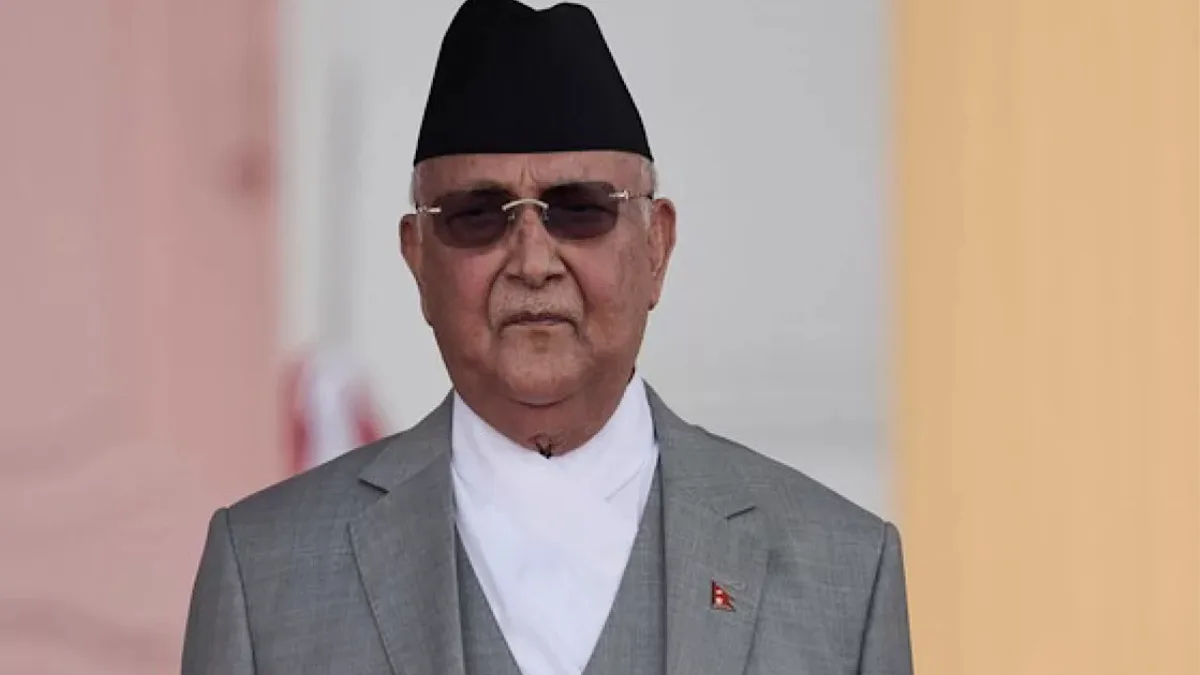
Nepalese Prime Minister KP Sharma Oli has lifted the social media ban after protests against the move left 19 people dead and 0ver 200 injured.
In his first statement since the reversal, Oli said the unrest was “infiltrated by various vested interests,” which led to the “tragic loss of citizens’ lives.”
Advertisement
According to ANI, in his statement, he said, “I am deeply saddened by the tragic incident that took place during the protest called by the Gen-Z generation today. While we were confident that our children would peacefully voice their demands, the situation that arose due to the infiltration of the protest by various vested interests has resulted in the tragic loss of citizens’ lives.”
He stressed that the government has no intention of restricting social media and would ensure a safe environment for its use, saying that further protests were unnecessary. Oli added that the unrest would not be allowed to persist and assured that an inquiry panel would be set up to examine the day’s events, assess the damage and causes, and submit recommendations within 15 days to prevent such incidents in the future.
Nepal’s Home Minister Ramesh Lekhak, who represented the Nepali Congress party in the coalition government, resigned on Monday on moral grounds as massive anti-government protests in Kathmandu and other regions turned violent, leaving at least 19 people dead and over 200 injured.
According to news agency ANI, Lekhak submitted his resignation to Prime Minister Oli during a cabinet meeting held at the Prime Minister’s official residence in Baluwatar.
Prime Minister Oli had convened an urgent cabinet meeting after demonstrations over alleged corruption and the government’s recent ban on 26 social media platforms spiraled into deadly violence, with police opening fire on protesters. Thousands of demonstrators took to the streets of Kathmandu, violating restricted zones and forcing their way into the Parliament premises, raising anti-government slogans, demanding that the corrupt regime be brought to justice, and calling for the social media ban to be lifted.
In response to the unprecedented protest, police resorted to firing tear gas shells and live ammunition in an attempt to disperse the demonstrators.
Meanwhile, authorities had imposed a curfew across several parts of Kathmandu, including Shital Niwas (the President’s residence), Maharajgunj, Lainchaur (the Vice President’s residence), Singha Durbar, and Baluwatar (the Prime Minister’s residence).
The protests were led by ‘Hami Nepal,’ an NGO established in 2015, widely recognised for its humanitarian work such as disaster relief, food distribution, and restoring water supplies after floods and earthquakes.
Major opposition parties, including the CPN (Maoist Centre) and CPN (Unified Socialist), have backed the protests, demanding Prime Minister Oli’s resignation as the political crisis deepens.
On September 4, the government had banned over two dozen social media sites, including Facebook, Whatsapp, X, Instagram and Youtube, for failing to register with the Ministry of Communication and Information technology within the given deadline. While the government has said that the social media sites were banned to bring them under regulation, protesters have called it an attack on free speech.